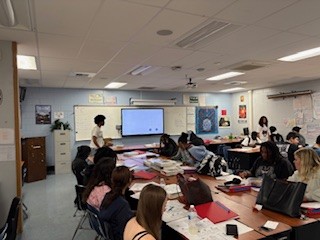
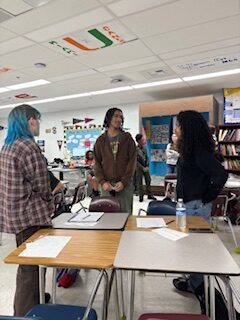
This year, the Ryan Nece Foundation’s Student Service Club set out with a simple but ambitious theme: Preparing to Progress. It’s a phrase that captures exactly what we believe education should do: Equip students with the skills, mindset, and confidence to navigate their futures with purpose – not just fill their heads with information they’ll never use.
Twenty years into this work, we’re more convinced than ever that education is most powerful when students understand themselves first, and then contribute to something greater than themselves. This past year, our students proved that in ways big and small, from classrooms in Brandon to food banks in Tampa, and we’re excited to share what that looked like.
By the Numbers
Growth showed up everywhere this year:
- 2,000+ students served per month
- 20 teacher partners, including 6 new educators
- 17 schools across Hillsborough and Pinellas Counties, including 5 new school partners
- 70 class periods served per month (on average)
Our High School Partners list grew to include Alonso, Brandon, Chamberlain, Durant, East Bay, Freedom, Gaither, Jefferson, Jacobson Tech, King, Lennard, Plant City, Sickles, Spoto, Strawberry Crest, Sumner, and Wharton.
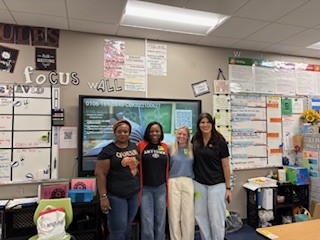
As one partnering teacher at Spoto High School put it, she feels fortunate to have the Ryan Nece Foundation visit each month with lessons her students love and refer back to often.
From Mind Shifts to Growth Moves: Measuring What Actually Sticks
We’ve always believed that real impact isn’t about how many students hear a lesson, it’s about how many students go out and apply it. That’s the transition from a “Mind Shift” to a “Growth Move,” and this year we tracked it closely across seven skill areas:
- Emotional Intelligence — 45% of students applied it (23/51)
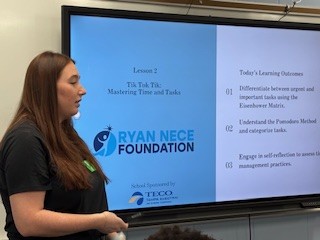
- Time Management — 41% applied it (75/183)
- Career Planning — 37% applied it (21/57)
- Finance — 34% applied it (65/191)
- Ethics & Values — 31% applied it (27/87)
- AI Awareness — 30% applied it (75/183)
- Communication — 30% applied it (40/135)
Behind every percentage is a student’s voice. A 9th grader at Brandon High shared that they started using the Eisenhower Matrix to prioritize tasks by urgency and importance. A 12th grader at Alonso High said they started budgeting their expenses and setting aside a set amount from every paycheck. And a 10th grader at Gaither High told us AI helps them understand lessons faster, but that it’s important to use it ethically and still do their own thinking.
Maybe the most powerful reflection came from an 11th grader at Brandon High, who said they never thought of themselves as a leader because they thought leaders were the loudest people in the room, until the Ryan Nece Foundation showed them that the most powerful thing you can do is show up for someone else, quietly and consistently, without needing the credit.
Connecting Students to Leaders: Pathways and Pivots
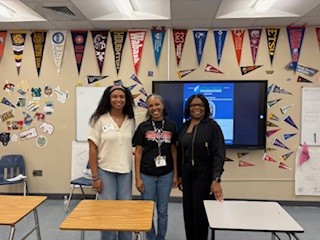
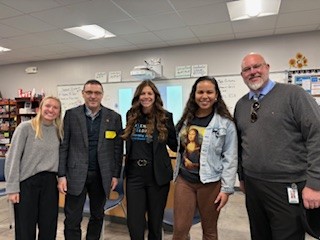
This year, 39 Greater Tampa Bay professionals volunteered their time as career panelists or subject-matter speakers, helping demystify what success actually looks like (i.e. success is not a straight line, but a collective journey of continuous learning, resilience, and service).
Students walked away with concrete next steps across six areas: Strategic career and educational planning, professional networking, community leadership, soft-skills development, resilience and growth mindset, and workforce/vocational exploration. Students told us they were researching scholarships to avoid debt, seeking out mentors, practicing elevator speeches for job interviews, and exploring apprenticeships and technical certifications as real alternatives to a four-year degree.
Beyond the Classroom: Service Learning in Action
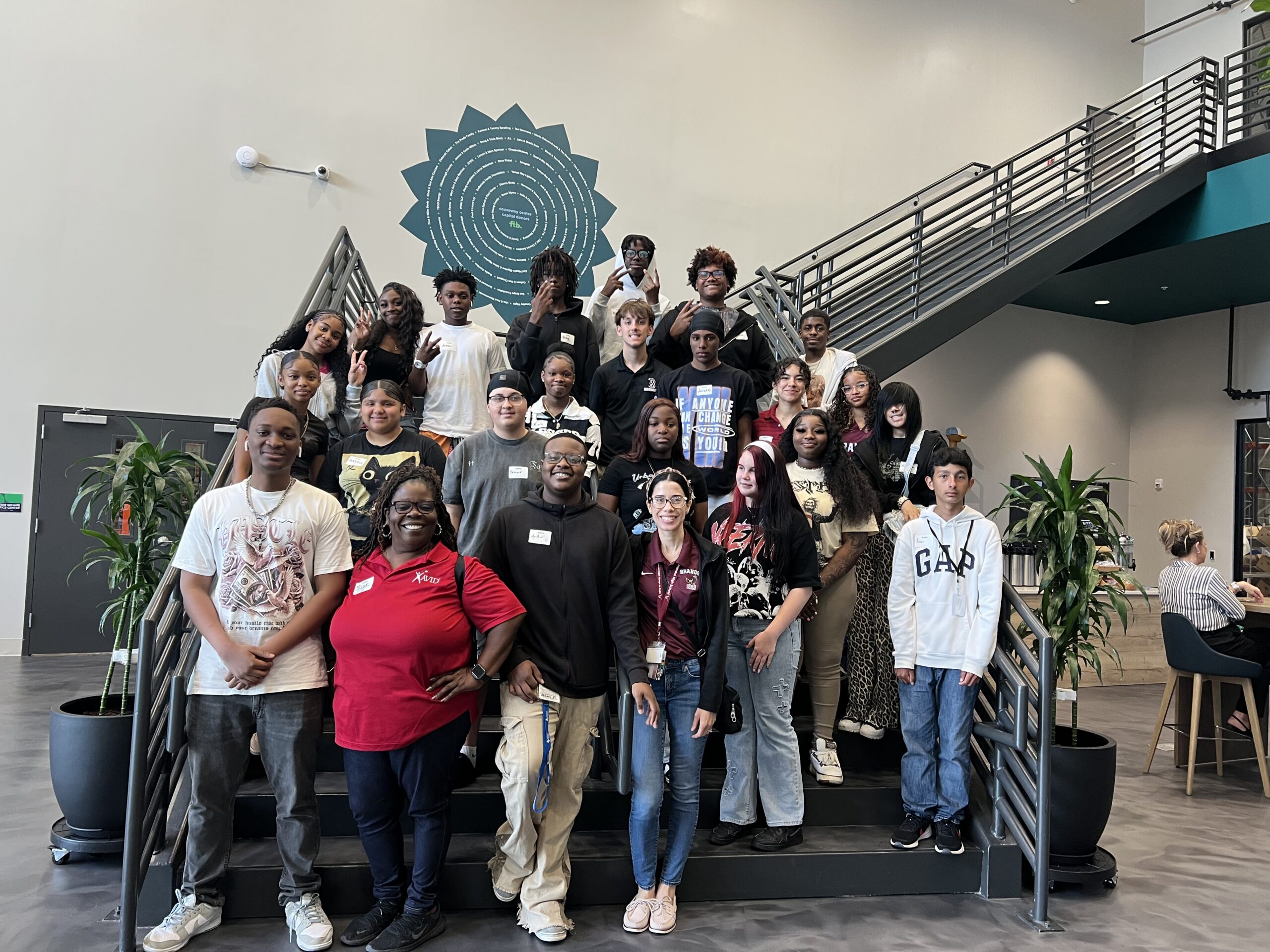
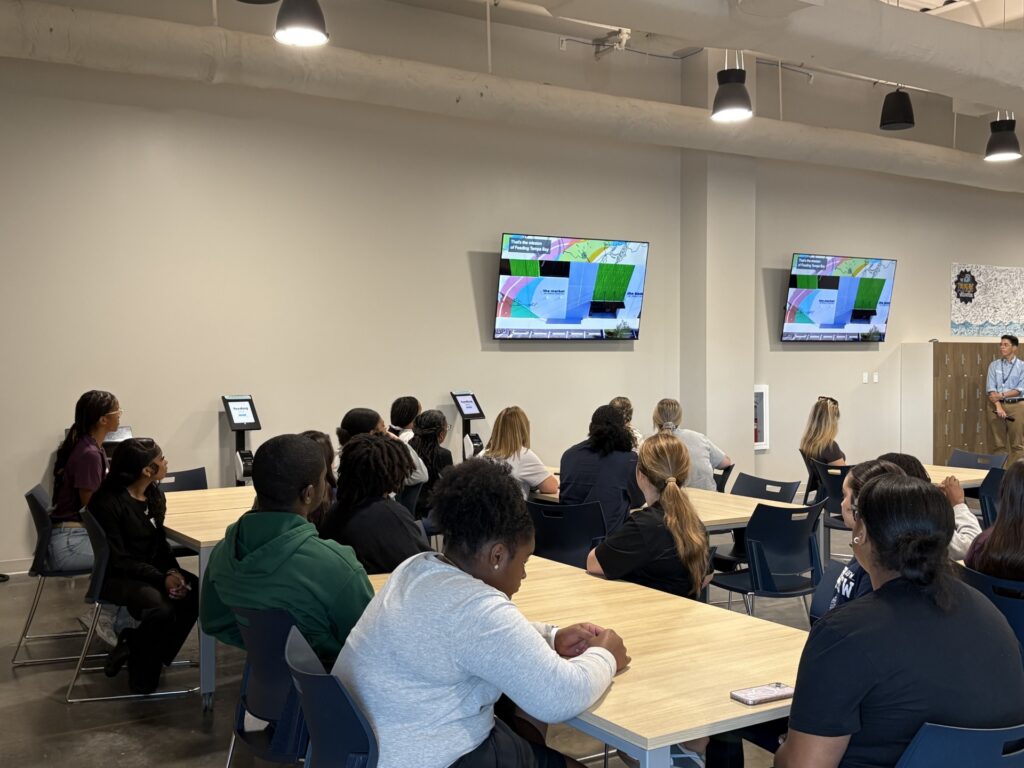
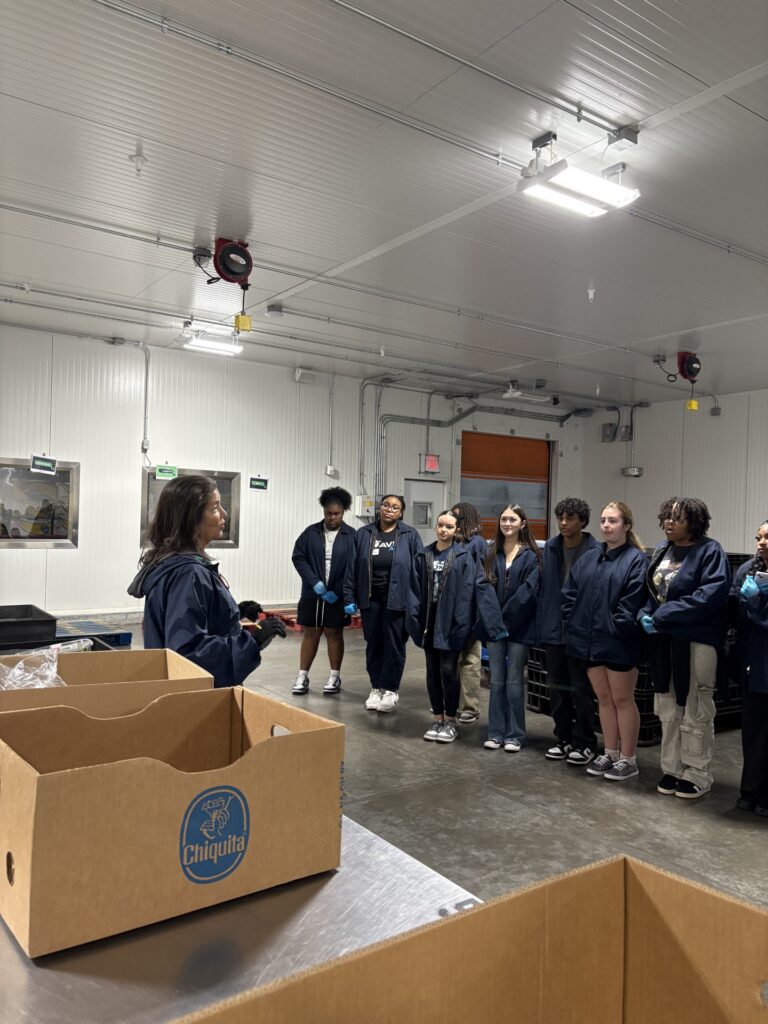
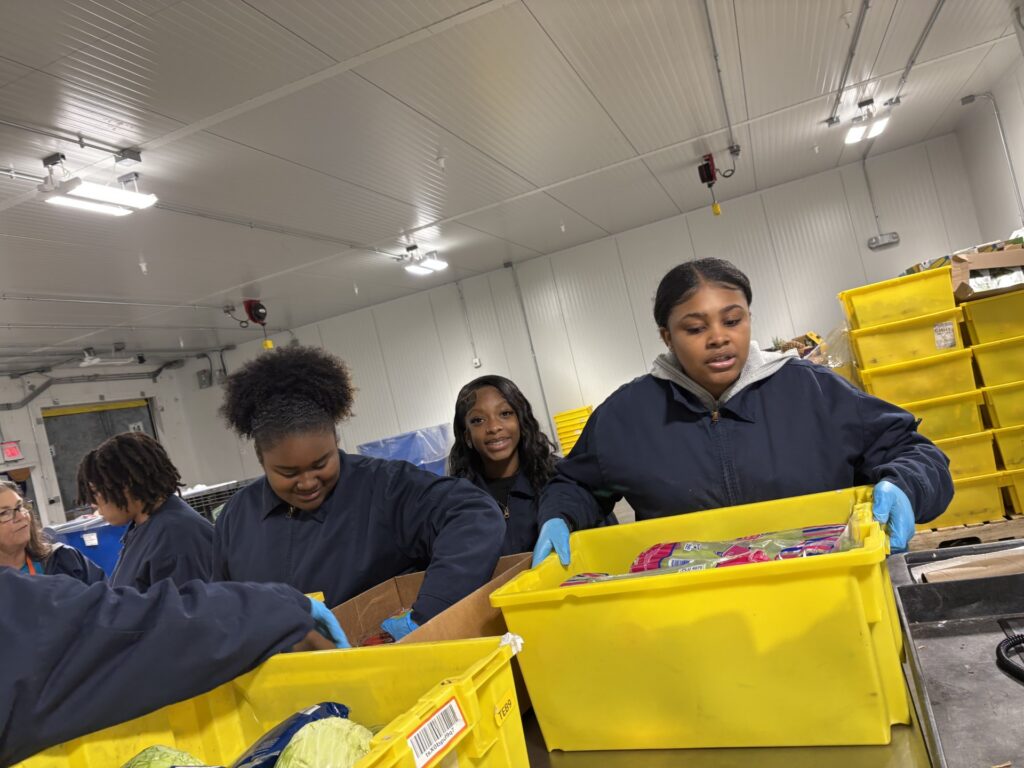
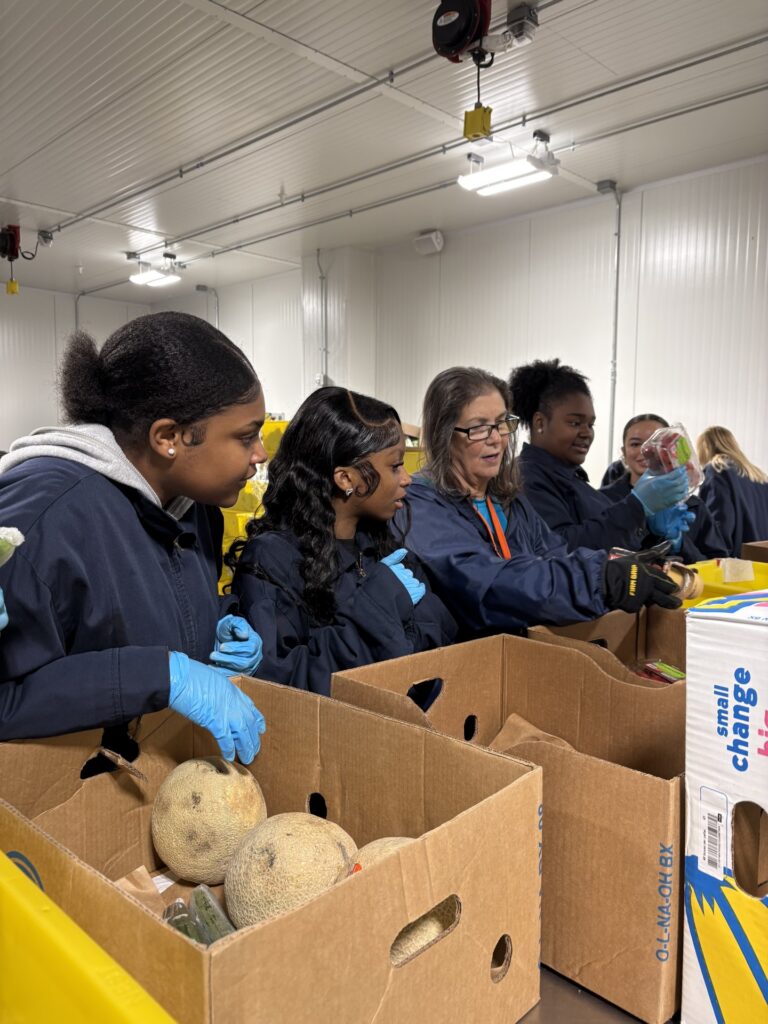
We piloted 5 service-learning field trips to Feeding Tampa Bay this year, where more than 60 students sorted, packed, and prepped 38,190 pounds of food (the equivalent of 31,823 meals) for families across our community.
These trips became a bridge between tactical, hard skills (quality control, adaptability, logistical organization) and interpersonal, soft skills (empathy, adult interaction, cooperation). A 10th grader at Spoto High summed it up simply: This trip made them feel more included, and made them realize that people can make a big difference.
What We Learned
Three big takeaways are already shaping how we plan next year:
- Student Engagement: Students value real-life relevance and prefer interactive, hands-on learning, which tells us that learning should progress from exploration to application as students move through grade levels.
- Volunteer Patterns: Volunteer hours rise with grade level, with 12th graders contributing the most, meaning earlier grades need more structured encouragement to build volunteering habits sooner.
- Service-Learning Field Trips: These trips serve as a powerful entry point to service, helping students connect their experiences to future interests and building real social awareness and empathy.
As one 10th grader at King High told us, they love that the information we teach is actually useful and helps them grow, and they wish the program showed up more than once a month. That kind of feedback is exactly what keeps us pushing to do more.
The Data Behind the Stories
At the end of the year, 1,173 students completed our End-of-Year Survey. The results reinforced what we were already seeing in classrooms:
- 90% of students (827 of 916 responses) said they applied a leadership skill learned through the program this year.
More pointedly:
- 65% of students reported applying negotiation or persuasion skills in real life, from navigating family conversations to collaborating more effectively in group academic work.
- 60% of students began applying new time-management strategies, from studying more effectively to breaking large tasks into manageable chunks.
A Call to Action
We are only getting started. As we look toward the next 20 years of student learning and service, we remain committed to empowering students to discover meaningful ways to support their communities, identifying and solving real challenges within their own lives, schools, and neighborhoods. By fostering critical thinking, compassion, and action, we will continue equipping students with the skills and opportunities needed to create lasting, positive change.
None of this happens without our incredible community of partners: Our Board of Directors, our 20 dedicated teacher partners, our school site coordinators, Hillsborough County Public Schools, and impact investors (like TECO and United Way Suncoast’s ACE Grants program).
As one partnering teacher at Wharton High School told us, she can’t wait for next year, and honestly, neither can we. Thank you for being part of the Power of Giving.
You can download our 2025-2026 Student Service Club – A Year of Impact Report here.